Artiserv
Artiserv
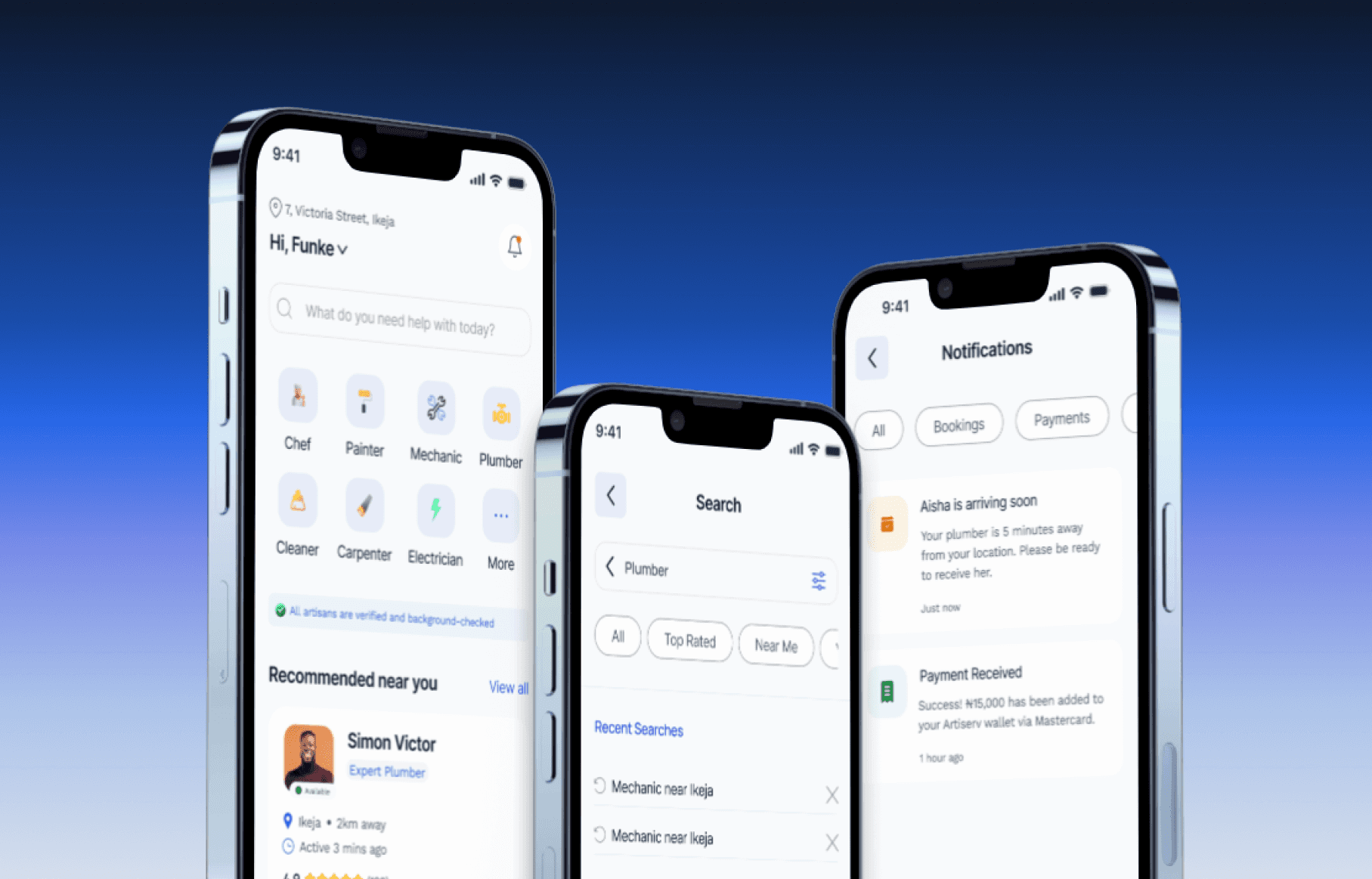
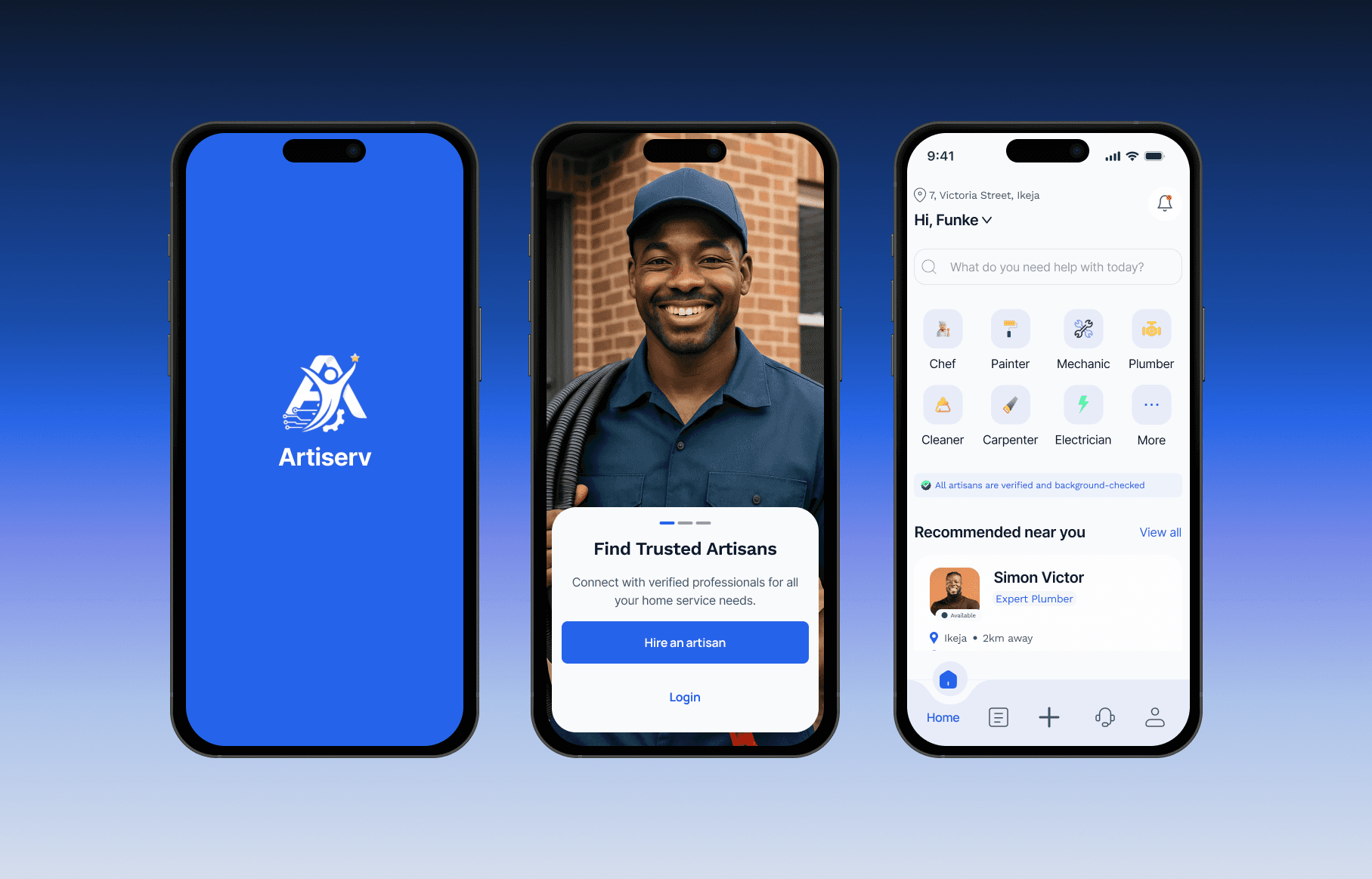
Designed a mobile app that helps users find, chat with, and book verified artisans in real time, reducing service uncertainty and improving booking confidence from first contact to job completion.
Mobile UX, iOS/Android, User Research, Insight Translation, Information
Architecture, Interaction Design, UX Writing, Design for Trust & Safety
Mobile UX, iOS/Android, User
Research, Insight Translation,
Information Architecture, Interaction
Design, UX Writing, Design for
Trust & Safety
The Problem
Users struggled to confidently hire artisans because there was no clear way to communicate upfront, track progress in real time, or know exactly when and how payments and reviews should happen, leading to anxiety, mistrust, and abandoned service requests.
In many local service experiences, users rely on phone calls, WhatsApp messages, or referrals, which often results in unclear pricing, delayed responses, and no visibility once the artisan is on the way. As mobile usage continues to dominate, users expect the same transparency and control they get from ride-hailing and delivery apps, but this level of structure was missing in artisan services.
Before
✕ Pricing was often unclear until the artisan arrived, causing disputes
✕ Users contacted artisans without knowing if they were available or trustworthy
✕ Users had no visibility into where the artisan was after booking
✕ Communication happened too late, leading to anxiety and cancellations
After
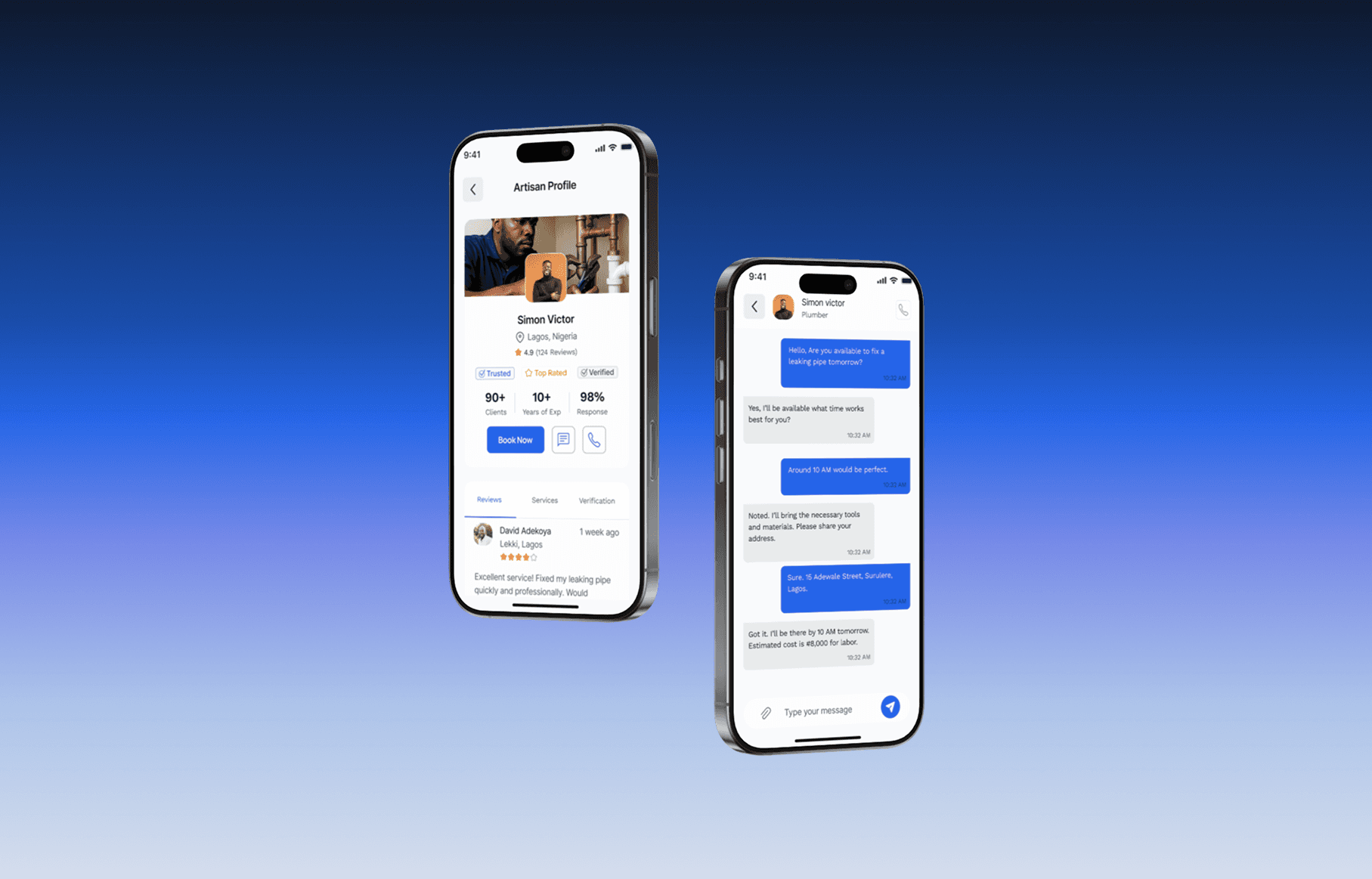
✓ Users chat with artisans before booking to confirm availability and expectations
✓ Pricing is shown upfront, helping users make informed decisions
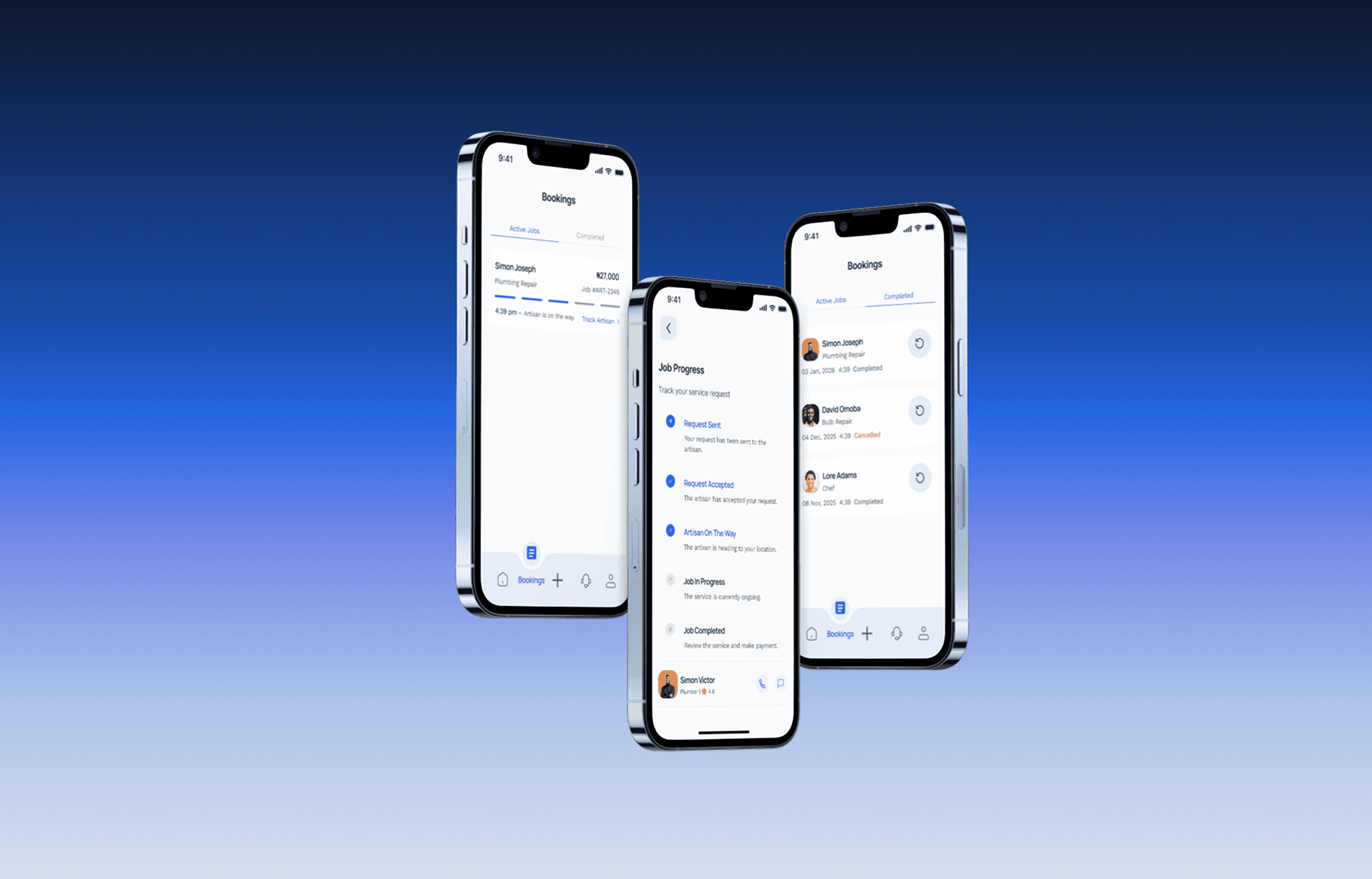
✓ Real-time status tracking keeps users informed from acceptance to completion
✓ Structured notifications reduce uncertainty and improve service confidence
Key Decisions
Enabled live chat with artisans before booking
User research showed that uncertainty about availability, pricing, and service scope was the biggest blocker to completing a booking, and users expected to ask questions upfront based on familiar service apps.
Designed real-time job status tracking
Users wanted visibility and reassurance after booking, especially when inviting someone into their home, and real-time updates reduced the need for repeated follow-ups.
Separated payment and review into two clear steps
This ensured users completed payment before leaving feedback while still making the review feel voluntary and thoughtful rather than forced.
My Role
Designed the end-to-end user (requester) mobile app experience Structured user flows for finding, chatting with, and booking artisans Designed real-time job tracking and status updates Created payment, review, and notification flows Designed profile, settings, and trust-focused screens
Lessons Learned
I should have validated the live chat flow earlier
What I'd do differently: I would run quick usability tests to identify the minimum information users need in chat before booking, helping reduce unnecessary back-and-forth while still maintaining trust.
Payment expectations needed earlier confirmation
What I'd do differently: I would surface payment timing earlier in the flow using micro-copy and visual cues to set expectations before users commit.
Status updates could be more customizable
What I'd do differently: I would allow users to customize notification frequency so power users can receive fewer updates while first-time users stay fully informed.
The Problem
Users struggled to confidently hire artisans because there was no clear way to communicate upfront, track progress in real time, or know exactly when and how payments and reviews should happen, leading to anxiety, mistrust, and abandoned service requests.
In many local service experiences, users rely on phone calls, WhatsApp messages, or referrals, which often results in unclear pricing, delayed responses, and no visibility once the artisan is on the way. As mobile usage continues to dominate, users expect the same transparency and control they get from ride-hailing and delivery apps, but this level of structure was missing in artisan services.
Before
✕ Pricing was often unclear until the artisan arrived, causing disputes
✕ Users contacted artisans without knowing if they were available or trustworthy
✕ Users had no visibility into where the artisan was after booking
✕ Communication happened too late, leading to anxiety and cancellations
After
✓ Users chat with artisans before booking to confirm availability and expectations
✓ Pricing is shown upfront, helping users make informed decisions
✓ Real-time status tracking keeps users informed from acceptance to completion
✓ Structured notifications reduce uncertainty and improve service confidence
Key Decisions
Enabled live chat with artisans before booking
User research showed that uncertainty about availability, pricing, and service scope was the biggest blocker to completing a booking, and users expected to ask questions upfront based on familiar service apps.
Designed real-time job status tracking
Users wanted visibility and reassurance after booking, especially when inviting someone into their home, and real-time updates reduced the need for repeated follow-ups.
Separated payment and review into two clear steps
This ensured users completed payment before leaving feedback while still making the review feel voluntary and thoughtful rather than forced.
My Role
Designed the end-to-end user (requester) mobile app experience Structured user flows for finding, chatting with, and booking artisans Designed real-time job tracking and status updates Created payment, review, and notification flows Designed profile, settings, and trust-focused screens
Lessons Learned
I should have validated the live chat flow earlier
What I'd do differently: I would run quick usability tests to identify the minimum information users need in chat before booking, helping reduce unnecessary back-and-forth while still maintaining trust.
Payment expectations needed earlier confirmation
What I'd do differently: I would surface payment timing earlier in the flow using micro-copy and visual cues to set expectations before users commit.
Status updates could be more customizable
What I'd do differently: I would allow users to customize notification frequency so power users can receive fewer updates while first-time users stay fully informed.